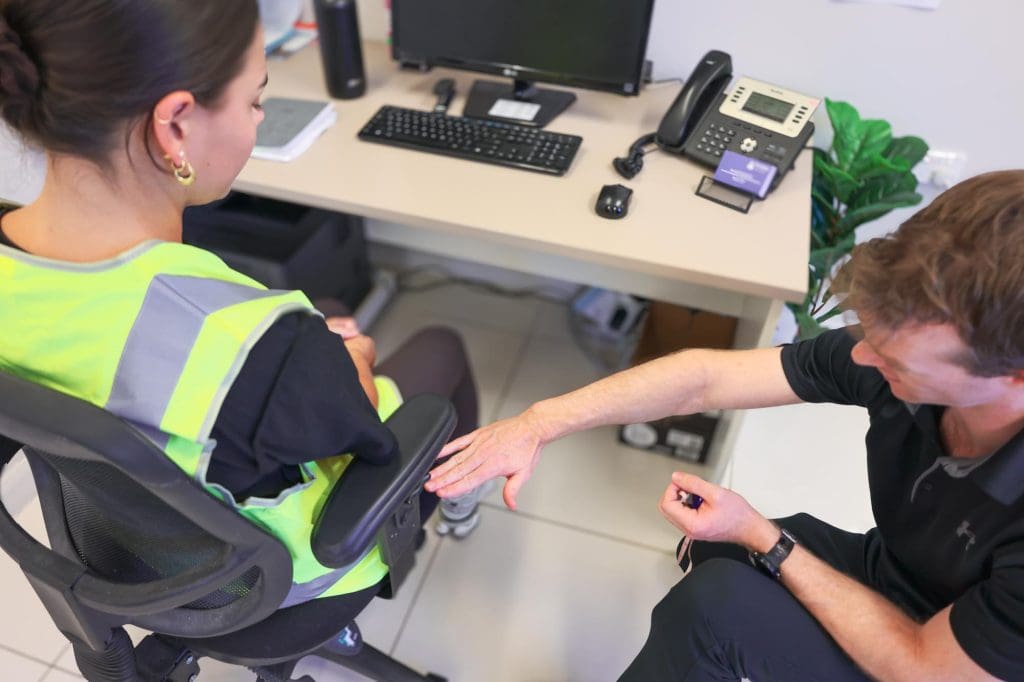
Tennis elbow is one of the most common workplace injuries seen by physiotherapists in Townsville — particularly among workers in trades, manufacturing, warehousing, and other physically demanding industries. Whether you’re managing a team or experiencing elbow pain yourself, understanding this condition can help you act early, reduce time off work, and prevent it from becoming a long-term problem.
Here are 10 essential facts about tennis elbow and what Townsville workplaces can do about it.
1. What Is Tennis Elbow?
Tennis elbow — medically known as lateral epicondylitis — is a type of overuse injury called a tendinopathy. It affects the muscles and tendons that attach to the bony point on the outside of your elbow (the lateral epicondyle). Despite the name, you don’t need to play tennis to get it — it’s extremely common in manual and physical workplaces across Townsville.
2. What Causes Tennis Elbow?
Tendinopathies develop when a tendon’s load capacity is exceeded through overuse, resulting in what researchers call a failed healing response. At a cellular level, tendon cells fail to repair correctly, leading to thickening of the tendon and changes in its composition.
Importantly, sudden increases in workload — such as taking on more manual tasks than usual — are a common trigger. Workers returning from leave or being redeployed to heavier duties are particularly at risk.
3. Tennis Elbow Is Not an Inflammatory Condition
This surprises many people. Unlike a sprained ankle, tennis elbow does not typically cause swelling, redness, or heat. Because it’s a tendinopathy rather than a true inflammatory injury, treatments aimed purely at reducing inflammation — like rest alone or anti-inflammatories — often fall short. This is an important distinction for workplace injury management in Townsville.
4. What Are the Symptoms?
Common symptoms include:
- Pain on the outside of the elbow that may radiate into the forearm
- Pain with gripping, twisting, or manipulating objects
- Morning stiffness or night pain following activity
- Occasional numbness in the outer forearm or hand if the radial nerve becomes irritated
If you or a worker in your Townsville workplace is experiencing these symptoms, early physiotherapy assessment is strongly recommended.
5. Which Jobs and Industries in Townsville Are Most at Risk?
Physical and manual roles involving repetitive upper limb loading carry the greatest risk. In Townsville, this includes:
- Tradespeople (plumbers, electricians, carpenters)
- Manufacturing and warehouse workers
- Construction workers
- Agricultural and mining industry workers
- Office workers performing repetitive computer or data-entry tasks
If your workforce includes any of these roles, a proactive workplace physiotherapy assessment can identify risks before injuries occur.
6. What Does the Research Say About Treatment?
The evidence is clear: activity modification combined with progressive strengthening is the most effective treatment for tennis elbow. Most leading clinical guidelines recommend this approach over passive treatments or injections.
From a workplace injury management perspective, allowing workers to modify or temporarily change duties when symptoms first appear is critical to preventing the condition from worsening and reducing the likelihood of extended time off work.
A Townsville workplace physiotherapist can help design an appropriate return-to-work or modified duties plan tailored to your specific industry demands.
7. How Long Does Tennis Elbow Take to Heal?
The majority of tennis elbow cases resolve within 6 to 12 months with appropriate conservative management. Cases identified and treated early — within the first six months — tend to recover significantly faster. This reinforces the value of early reporting and prompt physiotherapy intervention in Townsville workplaces, rather than waiting for symptoms to become severe.
8. Do Workers Need Imaging or Scans?
In most cases, no imaging is required. A clinical diagnosis by an experienced physiotherapist or GP is sufficient. Imaging is only warranted when red flags are present, such as:
- History of trauma or acute injury
- Joint locking or clicking
- Signs of infection
- Sudden neurological weakness
For the vast majority of Townsville workers presenting with elbow pain, a hands-on physiotherapy assessment is all that’s needed to confirm the diagnosis and start treatment.
9. Are Cortisone Injections or Surgery Recommended?
Cortisone injections are generally not recommended for tennis elbow. While they may provide short-term relief, research suggests they can be harmful to tendon health in the long term and are associated with higher recurrence rates.
Surgery is a last resort only — reserved for cases that have not responded to a thorough course of conservative management and where an orthopaedic surgeon recommends it. The vast majority of Townsville workers with tennis elbow will never need surgery if the condition is managed well from the start.
10. How Can Townsville Workplaces Prevent Tennis Elbow?
Preventing tennis elbow requires proactive risk management using the hierarchy of controls. Here’s how this applies in Townsville workplaces:
Elimination, Substitution, or Isolation
The highest-level controls should always be considered first. Automation, robotic handling equipment, and tool redesign can significantly reduce repetitive upper limb demands — and are increasingly accessible across industries like manufacturing, warehousing, and postal services in Townsville.
Engineering Controls
Modifying workstations, tools, or equipment to reduce grip force and awkward forearm positions is a highly effective strategy. Regular servicing of tools and equipment also prevents excessive vibration — a key contributor to tendon injury.
Administrative Controls
Job rotation is one of the most practical and cost-effective workplace interventions, ensuring workers get regular breaks from repetitive tasks. Structured workplace strengthening programs, designed by a physiotherapist, can also increase workers’ physical capacity and resilience over time.
PPE
Cushioned rubber or neoprene gloves can help reduce vibration exposure for workers who regularly use power tools or vibrating equipment.
Work with a Townsville Workplace Physiotherapist
If you’re based in Townsville and want to reduce the risk of tennis elbow and other upper limb injuries in your workplace, our team can help. We offer:
- Workplace physiotherapy assessments
- Early intervention programs
- Return-to-work planning and modified duties support
- Workplace strengthening and injury prevention programs
Early action saves time, money, and keeps your team healthy and at work. Contact us today to discuss how we can support your Townsville workplace. https://ergophysionq.com.au/contact/
Reference
Buchanan BK, Varacallo MA. Lateral Epicondylitis (Tennis Elbow) [Updated 2023 Aug 4]. In: StatPearls [Internet]. Treasure Island (FL): StatPearls Publishing; 2026 Jan-.